Blake Flores · 21 October 2026
Following Money Trails from Forged Art Sales to Regional Waste Management Deals via Tech Tracking Tools
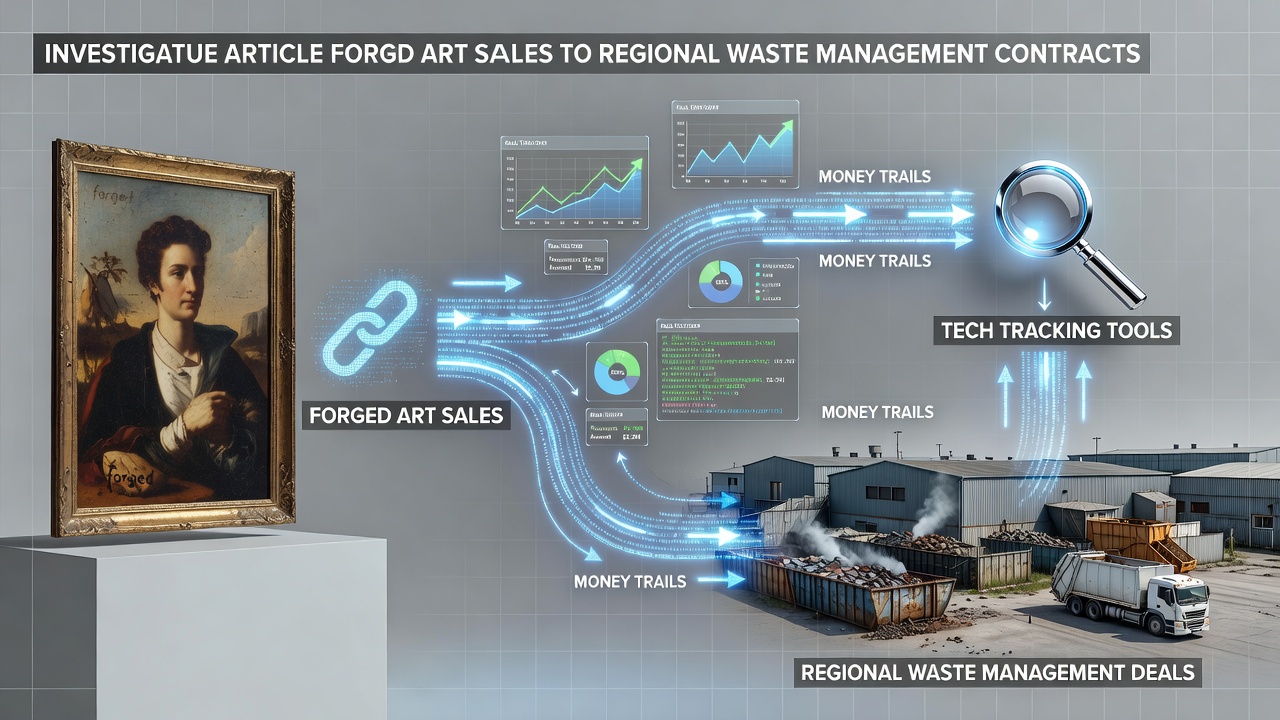
Investigators have documented how proceeds from forged artwork transactions flow into regional waste management contracts through layered financial structures that obscure origins while tech platforms monitor the flows in real time. Data from transaction records show that forged pieces often sell at inflated values in private auctions where payment routes split across multiple jurisdictions and then reappear as capital investments in local infrastructure projects such as landfill operations or recycling facilities. Researchers tracking these patterns note that digital ledgers and analytics software now capture timing correlations between art sale spikes and subsequent contract awards in waste sectors across several European regions.
Mapping the Initial Flow from Art Markets
Art market records indicate that forged works frequently enter circulation through galleries or online platforms where authentication gaps allow inflated pricing while funds move via shell entities registered in multiple countries. Observers note that once cash clears the initial sale the amounts often convert into cryptocurrency holdings or offshore accounts before surfacing again as equity in waste management firms bidding on municipal tenders. Studies from financial intelligence units reveal repeated instances where art-related entities and waste operators share common beneficial owners whose names surface only after cross-referencing corporate registries with blockchain analysis tools. In October 2026 several regulatory bodies updated their monitoring protocols to flag art-to-infrastructure transfers exceeding certain thresholds based on historical patterns identified in prior cases.
Tech Tools Enabling the Trace
Specialized software platforms combine blockchain explorers with artificial intelligence models that scan for unusual velocity in fund movements between unrelated sectors. These systems flag when payments originating from art auction houses align with deposit patterns in companies holding regional waste disposal permits. Experts at data analytics firms have refined algorithms that identify common wallet addresses or wire instructions linking the two industries while government agencies integrate similar tools into their oversight frameworks. One platform developed in collaboration with academic researchers processes millions of transactions daily and highlights clusters where art sale proceeds appear in waste contract financing within weeks of the original transfer.

Case Patterns Across Regions
Records from multiple investigations illustrate how a single forged painting sale in one country can fund a waste collection bid in another through a series of holding companies. In documented examples the initial proceeds pass through art investment funds before converting into loans for regional operators who then secure public contracts. According to Financial Action Task Force reports these cross-sector movements often exploit differences in regulatory scrutiny between luxury goods markets and environmental services. Additional data compiled by the Interpol financial crime unit shows similar linkages appearing in both North American and Asian jurisdictions where tech tracking has accelerated identification of the underlying networks.
Regulatory Responses and Data Sharing
Authorities have expanded information exchanges between art market regulators and environmental agencies to close detection gaps. New reporting requirements compel galleries and auction houses to disclose buyer details when sales exceed set limits while waste management bidders must reveal funding sources. These measures build on existing anti-money laundering frameworks yet focus specifically on the intersection of high-value movable assets and long-term service contracts. Analysts observe that integrated databases now allow quicker matching of art transaction timestamps with waste tender award dates reducing the window for undetected layering.
Conclusion
Digital tracking capabilities continue to evolve alongside the financial structures they monitor. Ongoing updates to analytics platforms and cross-agency data protocols provide clearer visibility into how funds move from forged art transactions into regional waste management arrangements. Continued refinement of these tools supports enforcement efforts across multiple jurisdictions while records from October 2026 onward reflect incremental improvements in detection speed and accuracy.